Keep required originals
Preserve contracts or other records that still have an operational or legal retention purpose. The applicable retention period depends on the document.
 FOLIO
& FOUND
Relocating his business led him to retrieve an old box containing documents, spare keys and digital storage media
Advertising reconstruction. The character, company and circumstances shown are fictional

After several years, he finally retrieved its contents
His small company was moving to a new office. During the change of address, the owner decided to close an old bank safe deposit box that had remained untouched through years of day-to-day business. It was not a dramatic discovery: the box held signed agreements, spare keys and a handful of digital storage media.
The move prompted a simple question: which records still needed to be kept nearby, and which belonged in a different part of the archive? The bank box had served one purpose, but the smaller working archive in the new office needed a different, more accessible arrangement.

Freeing up an old bank arrangement became part of reorganising the company records. The next step was an inventory, not an assumption that every old paper should stay.


On the new office table, every item was laid out in a clear sequence. Agreements came first, their dates and signatures checked against the company’s remaining obligations. Keys were grouped by what they opened. USB drives and other media were labelled for separate verification rather than being treated as a complete backup merely because they still existed.
Nothing in the box needed to be displayed as a treasure. It was ordinary business material whose value came from being identifiable, usable and retained for an appropriate reason.
The smallest part of the move was the box. The biggest part was deciding what was still worth keeping.
The owner finishes the inventory before deciding where the remaining physical records will belong.
A compact storage decision starts with separating everyday references from genuinely necessary originals. The owner grouped what remained by purpose and verified it before choosing a container.
Record what each item is, why it is retained and where it will be kept. The aim is a useful archive, not simply a smaller pile.
Preserve contracts or other records that still have an operational or legal retention purpose. The applicable retention period depends on the document.
Label spare keys with a separate reference record. Check readable digital copies and backups independently; physical storage alone is not data resilience.
Use appropriate retention decisions and confidential disposal procedures for superseded material, rather than moving every file by default.
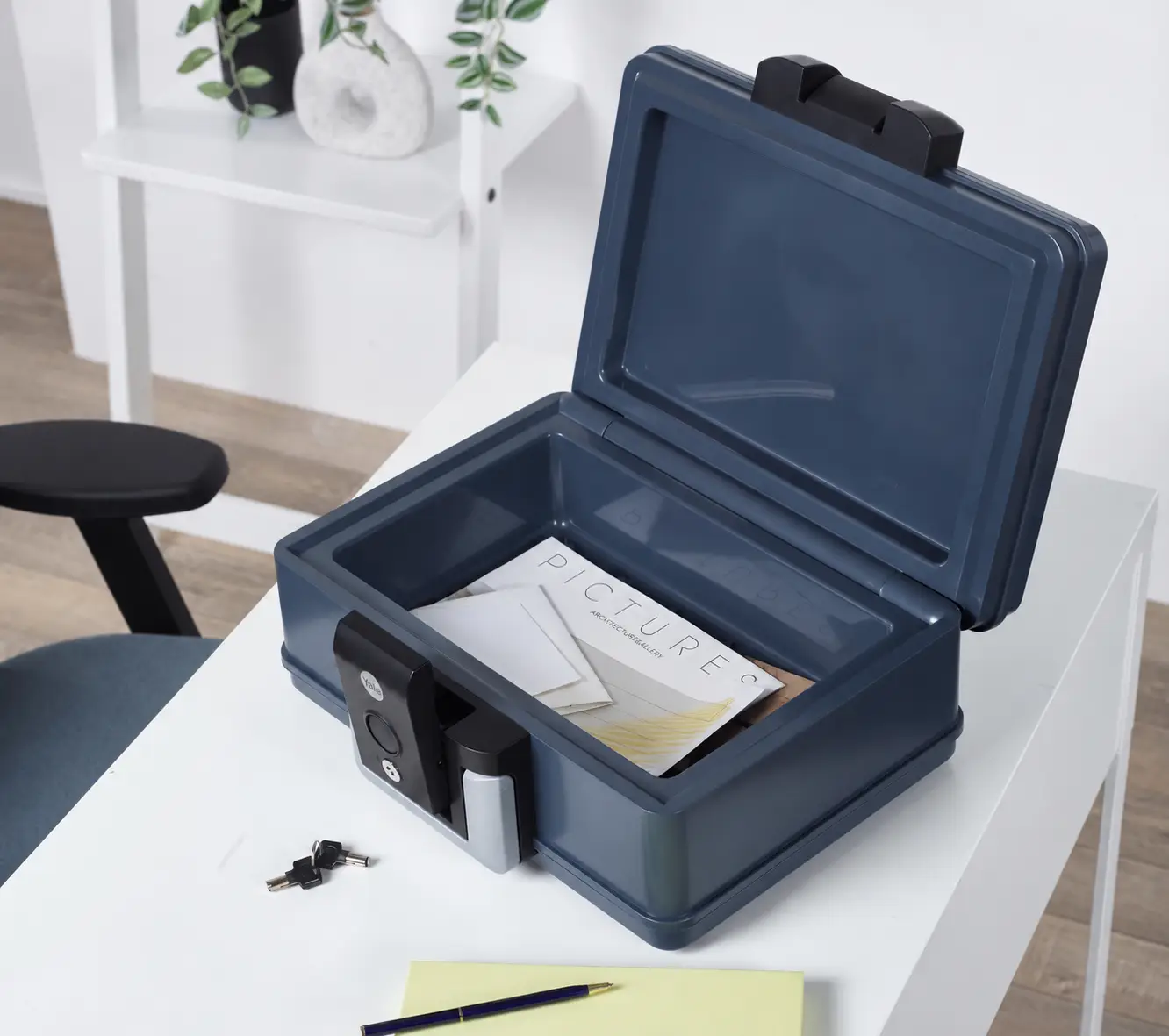
For the remaining small-format documents and labelled media, he wanted an easily located, key-operated fire chest with a carrying handle. He did not need it to replace the bank safe deposit box or claim professional burglary protection.
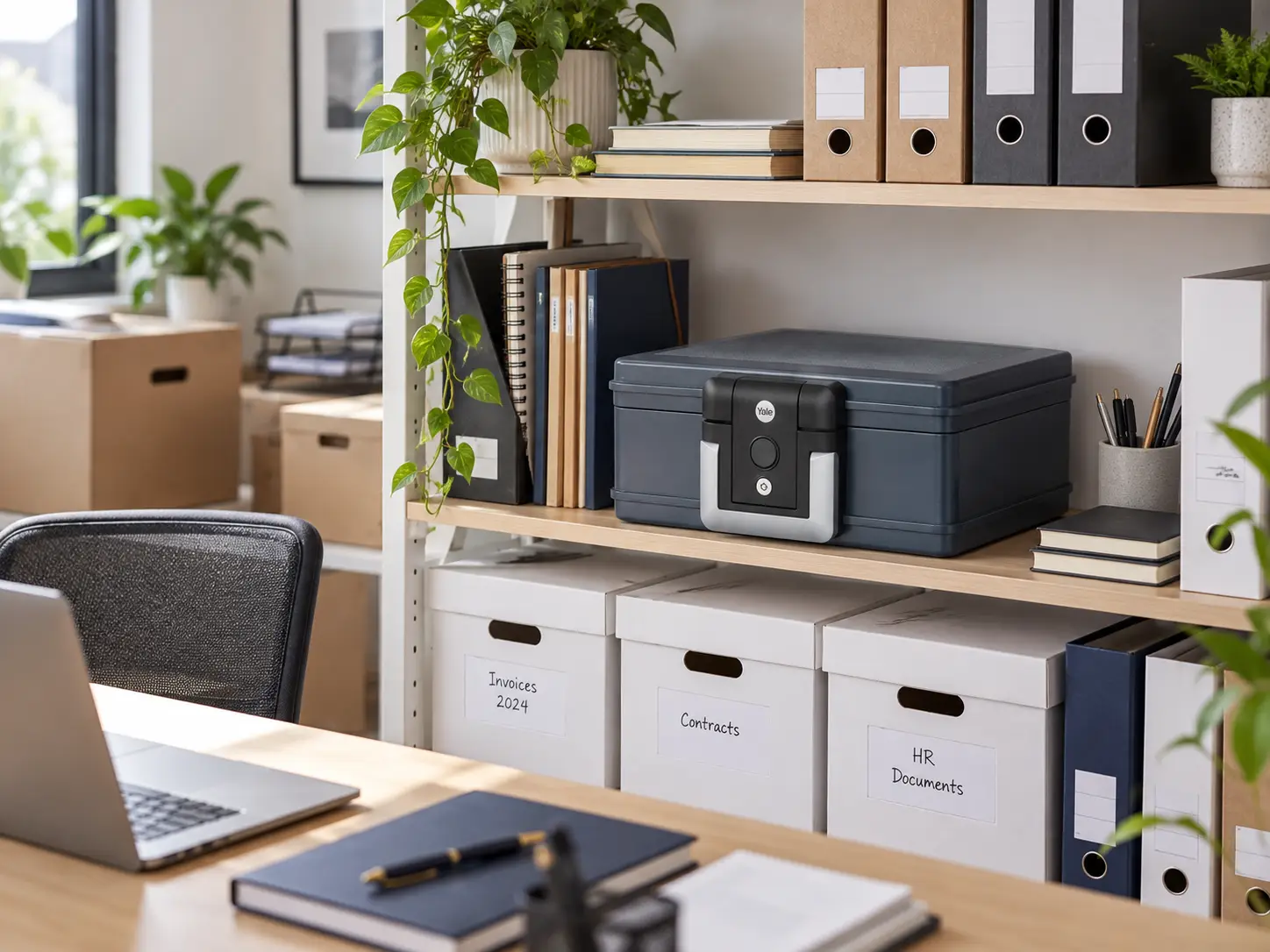
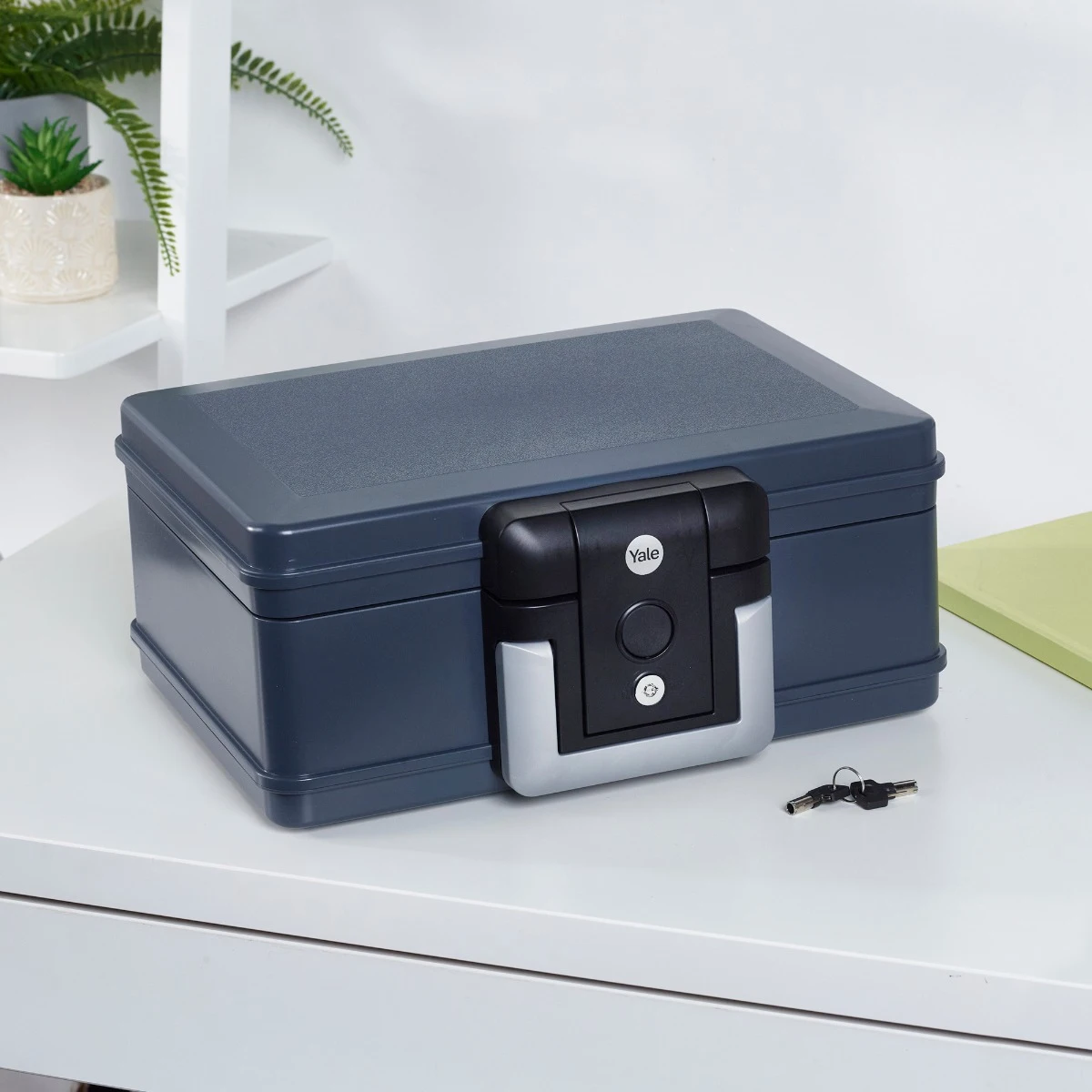
Yale’s Small Fire Chest (YFC/154/KB1) is a separately manufactured, key-locking storage product designed for important documents and digital storage media. Folio & Found does not make or sell it.
Understand the boundaries. “Up to 30 minutes” is a limited manufacturer claim, not a promise that contents will survive every fire. This product is not presented here as waterproof, theft-proof, a professional safe or a replacement for a bank safe deposit box. Confirm that the internal size suits your records before choosing it.
Manufacturer details: Yale UK · YFC/154/KB1
Compact fire chests are designed for specific uses. These answers bring together the manufacturer’s published measurements and the key boundaries to consider when organising a business archive.
Read Yale’s product informationExterior: H145 × W354 × D255 mm. Interior: H94 × W288 × D181 mm. Yale describes a 4-litre capacity and B5 document size. Check the fit of your own folders and media, including any sleeves or packaging.
Yale lists key locking, two supplied keys, a grey plastic casing with protective insulation and an integrated carry handle. A key lock on this type of fire chest is not a burglary-resistance certification.
Do not assume an absolute fire guarantee, a specific waterproof rating, impact protection, a theft-resistance rating or suitability for every type of digital media. The manufacturer’s own wording, instructions and any applicable limitations should guide a purchase.
Manufacturer specifications and claims should be checked on Yale’s website before making a purchase.
The office move ends with a considered storage decision. The product details, price and transaction belong to the actual seller—not this editorial feature.
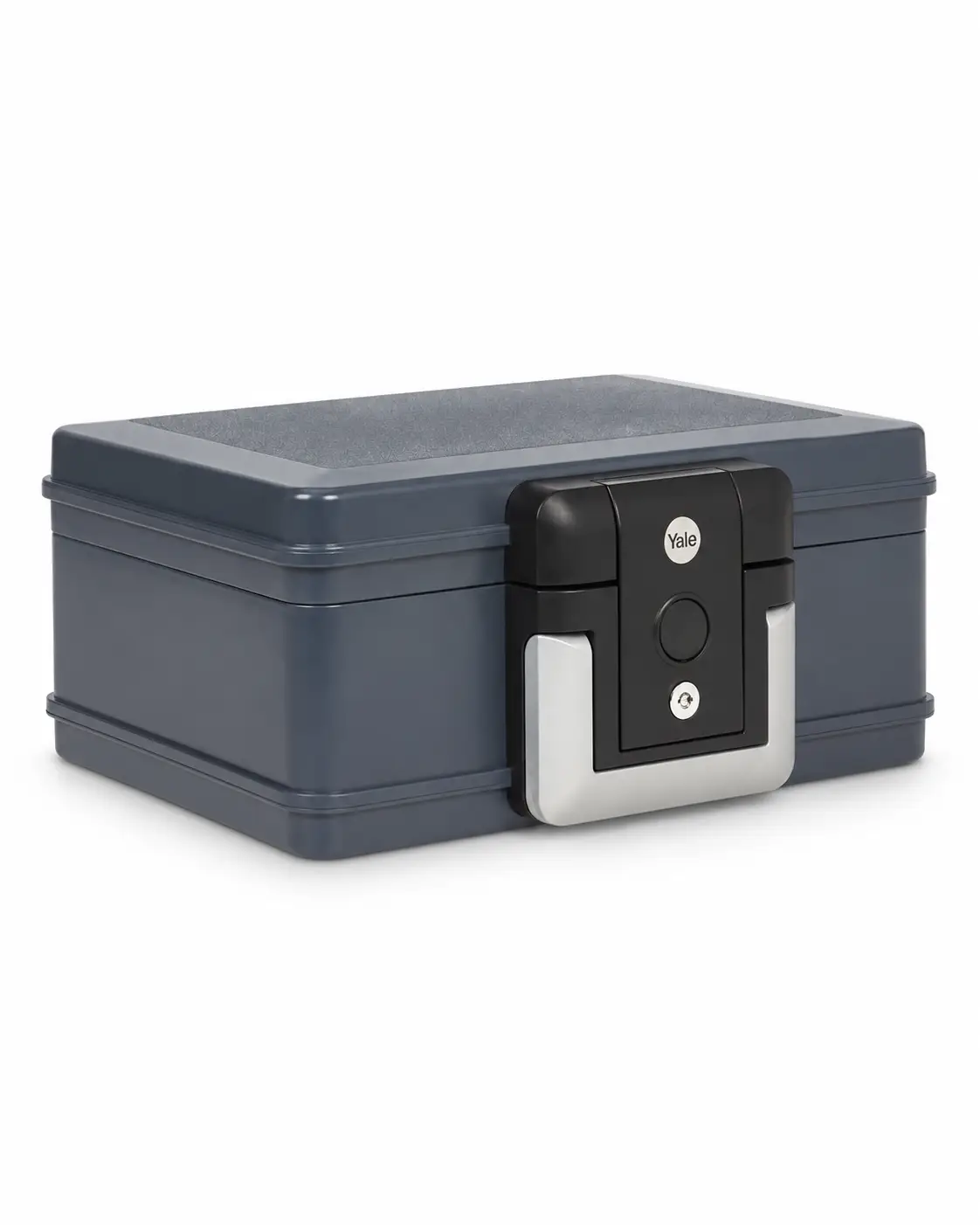 Yale / YFC-154-KB1
A compact, insulated, key-locking document chest with a carrying handle, intended for small-format important papers and digital storage devices as described by Yale.
You will be redirected to the official Yale website. Product specifications, price, availability and delivery terms are provided by the seller
Compare internal dimensions with the originals you intend to retain, especially if documents are in sleeves or folders. If your storage requirement includes security against theft, seek an appropriately specified product for that separate purpose.
Yale is the separate manufacturer and seller. The Yale website supplies current pricing, stock, product support, checkout, dispatch conditions and returns. Folio & Found does not take orders or payments for this item.